
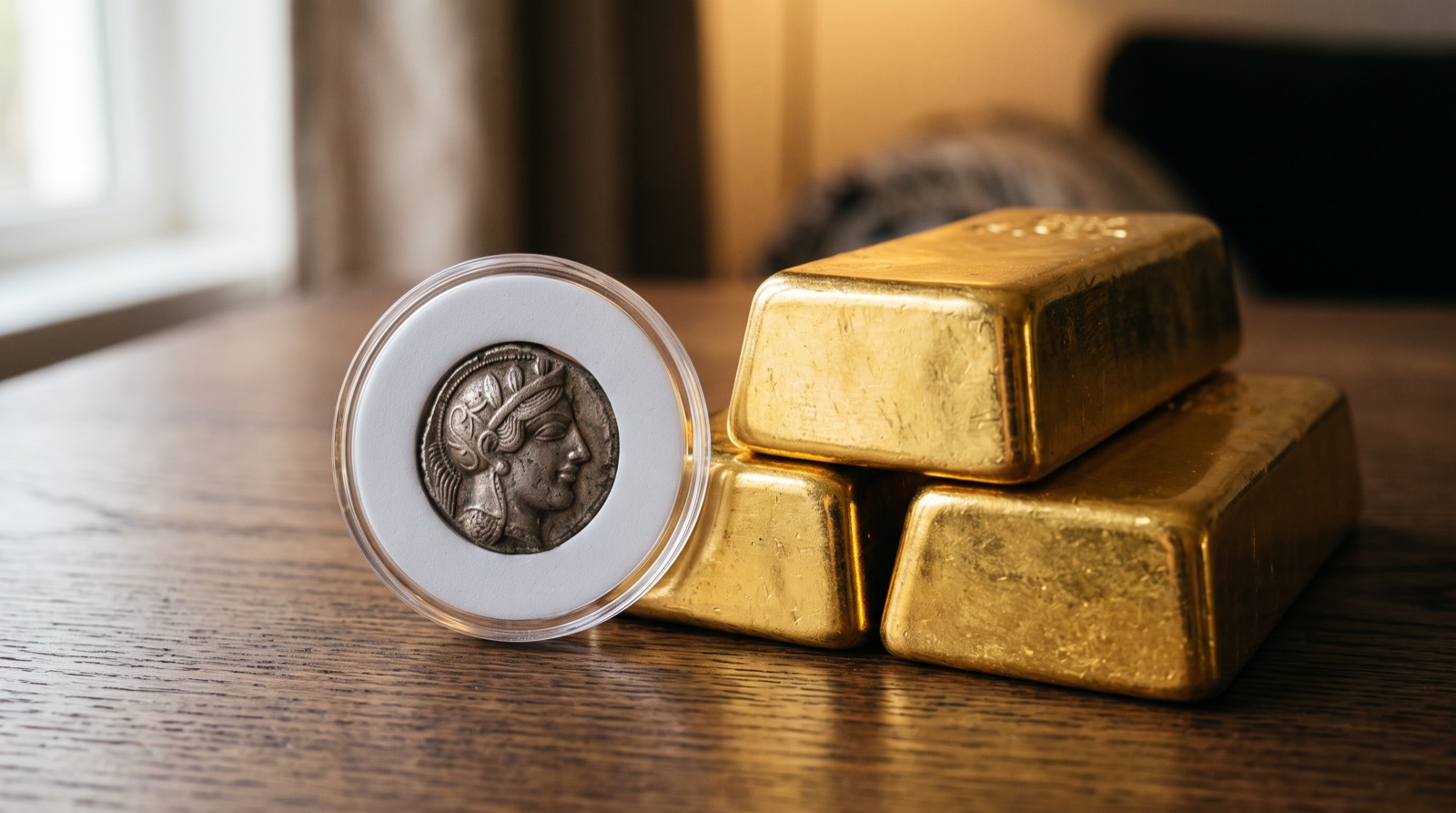
Every gold or silver coin falls somewhere between two poles. At one end is bullion, valued almost entirely for the metal inside it. At the other is numismatic, or collectible, coinage, valued for rarity, history, and condition. Knowing which one you’re holding — or buying — is one of the simplest ways to protect your money.
Bullion: priced by the ounce
Bullion coins and bars are made to hold precious metal in a standard, recognizable form. American Gold and Silver Eagles, Canadian Maple Leafs, South African Krugerrands, and generic bars and rounds all fall here.
Their value is straightforward: metal weight times the spot price, plus a modest premium to cover minting, distribution, and dealer costs. A Silver Eagle from one year is generally interchangeable with another of the same condition. That uniformity is the point — bullion is easy to price, easy to compare, and easy to sell.
Numismatic: priced by rarity and condition
A numismatic coin is worth more than its metal because collectors want it. Date, mint mark, mintage, survival rate, grade, and eye appeal all add value on top of melt.
Consider two silver dollars with nearly the same silver content. A common Morgan dollar in worn condition trades not far above its metal value. A scarce date-and-mint combination in high Mint State grade can be worth many multiples of its silver. Same metal, very different coin.
The middle ground
Some coins sit in between. Pre-1933 U.S. gold, such as common-date Saint-Gaudens and Liberty double eagles, and well-preserved Morgan and Peace dollars carry a premium over melt but still track metal prices closely. These are often called semi-numismatic or “generic” collectibles.
Where people lose money
Most costly mistakes come from mixing the two up:
- Paying a collector’s premium for a bullion-grade coin. A common coin marketed as “rare” or “limited” may resell for little more than its metal.
- Selling a collectible for melt. An inherited coin with a key date or high grade can be worth far more than its weight. Have it looked at before it goes in the scrap pile.
- Cleaning a numismatic coin. Polishing doesn’t touch bullion value, but it can erase much of a collectible’s premium.
- Ignoring the spread. The gap between what you pay and what you’d be offered back is usually narrow on bullion and wider on collectibles.
Which is right for you?
That depends on your goals. People who want metal exposure that’s simple to buy and sell often stick with bullion. Collectors who enjoy history and are willing to learn grading may find numismatics rewarding. Many people hold some of each. This is general information, not financial advice.
Know what you have
Washington Bullion carries both bullion and rare coins, and we offer free appraisals. Stop by 311 E Main St, Union, MO 63084, across from the courthouse, Monday through Friday 9am–4pm Central or Saturday by appointment, or call 1-636-744-8181.